
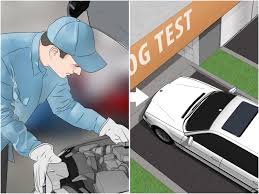

Passing a California emissions test often feels like a roll of the dice. It isn’t. Most drivers approach the testing center with a “hope for the best” attitude, which usually leads to a “Fail” certificate and a costly repair bill. You can control the outcome by understanding the mechanical and digital triggers that technicians look for during the inspection.
This guide provides a professional mechanic’s perspective on preparing your vehicle. We will move past the generic advice of “change your oil” and look at the specific sensor behaviors and heat cycles required to earn that passing grade. If you need to find a certified station immediately, look for a reputable Los Angeles smog check provider to get started.
Key Takeaways
- Drive your car for at least 20 minutes at highway speeds immediately before the test to ensure the catalytic converter reaches its light-off temperature.
- Clear your check engine light weeks in advance, as clearing codes right before the test resets “Readiness Monitors” and guarantees an automatic failure.
- Inspect your gas cap seal for cracks or debris, because a tiny leak in the rubber gasket causes more “Gross Polluter” failures than actual engine damage.
Why Most People Fail the Visual Inspection
The smog test is not just about what comes out of the tailpipe. It begins with a rigorous visual inspection. Technicians look for modified air intakes, disconnected vacuum lines, and frayed wiring. If you installed an aftermarket “cold air intake” that lacks an Executive Order (EO) number from the California Air Resources Board (CARB), you will fail instantly.
Check your vacuum hoses. Heat and age make rubber brittle. A cracked hose might not trigger a dashboard light yet, but a technician will spot it. Gently squeeze the black rubber lines near the intake manifold. They should feel pliable, like a stiff gummy bear. If they crunch or feel like hard plastic, replace them.
Small leaks matter. A loose battery terminal or a corroded ground wire can cause “electrical noise.” This noise interferes with the sensors sending data to the Engine Control Unit (ECU). Secure every connection. Clean surfaces ensure the computer sees the “clean” data it needs to pass the diagnostic portion of the test.
The Myth of the “Hot Engine” vs. Reality
Generic advice tells you to “get the car hot.” This is true, but most people do it wrong. Idling in the parking lot for ten minutes does nothing for your emissions system. In fact, prolonged idling can cause the catalytic converter to cool down below its effective operating temperature.
The catalytic converter is a chemical reactor. It requires extreme heat to trigger the internal precious metals. When you are actually standing over the hood of a car after a hard drive, you should feel intense heat radiating from the exhaust manifold area. This is a good sign.
Drive the car on the freeway for 15 to 20 miles. Maintain a steady speed. This allows the internal “honeycomb” of the converter to reach its peak efficiency. When you arrive at the smog check station, do not turn the engine off if the wait is short. Keep the internal temperatures high so the gases remain neutralized during the actual probe test.
Decoding the OBD-II Readiness Monitors
The biggest mistake I see beginners make in the shop is clearing a “Check Engine” light with a cheap scanner right before driving into the testing bay. They think that if the light is off, the car is fine. The state’s computer knows better.
When you clear a code, you also reset the “Readiness Monitors.” These are internal self-tests the car runs on its oxygen sensors, EGR system, and evaporative components. If these monitors say “Not Ready,” the technician cannot legally pass the vehicle.
How to Set Your Monitors
Depending on your clear coat hardness or the age of your vehicle, the “Drive Cycle” required to set these monitors varies. Generally, it involves a mix of city stop-and-go driving and sustained highway cruising.
- Start the engine cold and let it idle for two minutes.
- Drive at 55 mph for ten minutes without using cruise control.
- Decelerate to a stop without using the brakes (coast down).
- Idle in gear for two minutes.
If your car is from 2000 or newer, California allows one monitor (the Evaporative system) to be “not ready,” but all others must be complete. Do not gamble. Use a basic OBD-II dongle to verify that all monitors are “Ready” before you pay for the test.
The Gas Cap and the EVAP System
The Evaporative Emission (EVAP) test is the simplest part of the inspection, yet it causes thousands of failures. This system prevents gasoline vapors from escaping into the atmosphere. The most common point of failure is a $15 rubber seal on your gas cap.
Inspect the O-ring on your cap. It should be smooth and free of dry-rot cracks. If you see tiny “spiderweb” fractures in the rubber, buy a new OEM cap. Do not buy the cheapest “universal” cap from a bin; these often fail to maintain the specific pressure levels required by California sensors.
The technician will often hook your gas cap to a pressurized testing rig. If the pressure drops even slightly, the machine registers a failure. A quick wipe of the fuel filler neck with a clean rag can also help. Dirt or grit on the metal lip prevents a perfect seal.
Tire Pressure and the Dyno Test
For older vehicles (pre-2000), the test often involves a dynamometer. This is a set of rollers that allows the technician to “drive” the car while it remains stationary. If your tire pressure is uneven, the car may pull to one side or vibrate on the rollers.
Low tire pressure increases the load on the engine. When the engine works harder to spin the rollers, it produces more NOx (Oxides of Nitrogen). This can push a borderline car into the “Fail” category.
Inflate your tires to the exact specifications listed on your door jamb. Do not over-inflate. You want a smooth, consistent roll. If the car feels like it’s “chattering” on the rollers, the technician might abort the test, or the inconsistent load might cause a spike in emissions readings.
Oil Quality and Combustion Chemistry
Dirty oil contains trapped fuel vapors and carbon deposits. As the engine warms up, the Positive Crankcase Ventilation (PCV) system draws these vapors back into the intake to be burned. If your oil is old and saturated with fuel, it enriches the air-fuel mixture.
This creates a “rich” condition. It makes your engine work harder to balance the oxygen levels. Change your oil two or three days before the test. This gives the car enough time to circulate the fresh lubricant but doesn’t allow enough time for new contaminants to build up.
Avoid using “guaranteed to pass” fuel additives right before the test. Some of these chemicals alter the combustion temperature. If you use a fuel system cleaner, run the entire tank through the engine and refill with fresh, high-octane gasoline before showing up at the station. You want the most stable, predictable fuel in the tank.
Managing the Secondary Air Injection
Many modern cars use a secondary air pump to inject oxygen into the exhaust stream during startup. This helps the catalytic converter “fire up” faster. If this pump is failing, you might hear a high-pitched whine like a vacuum cleaner for the first 60 seconds after a cold start.
If you hear this noise, your system is struggling. While the pump might eventually turn off and the light might stay away, the ECU is tracking the “lazy” response time. Ensure the fuse for this pump is clean and the relay is functioning. A weak air pump is a frequent cause of “Ghost” failures where the car seems fine but fails the computer handshake.
Dealing with a “Gross Polluter” Designation
If your car fails significantly, California might label it a “Gross Polluter.” This sounds scary, but it usually just means you must take the car to a STAR-certified station for your next test. These stations have higher standards for equipment calibration.
Do not panic. Most Gross Polluter failures stem from a dead catalytic converter or a stuck EGR (Exhaust Gas Recirculation) valve. The EGR valve’s job is to lower combustion temperatures. When it sticks, NOx levels skyrocket.
You can often clean an EGR valve with specialized spray cleaner rather than replacing the whole unit. When the valve is working, you should be able to move the internal diaphragm manually (on older models) or hear it clicking during a digital bi-directional test.
Professional Perspective: The Technician’s View
The biggest mistake I see at the shop is people showing up with a battery they just jumped-started. If your battery died and you jumped it to drive to the smog station, you will fail. The moment power was lost, the ECU memory was wiped.
To the smog machine, your car looks like it just had its brain erased. It has no historical data to share. You must drive that car for several days to “re-teach” the computer how the engine behaves under load.
When you are at the station, watch the technician. A good tech will check the ignition timing and look for the “Timing Lead.” If your car allows for manual timing adjustment, ensure it is set to the factory specification. Being even two degrees off can lead to a failure in high-load scenarios.
Next Steps for a Guaranteed Pass
Do not wait until the last day of your registration cycle to get tested. Give yourself a two-week cushion. This allows for “Drive Cycles” if you have to reset the computer or time to source parts if a vacuum leak is discovered.
Your immediate next step is to perform a visual scan under your hood. Look for loose wires, cracked hoses, and that pesky check engine light. If everything looks solid, take the car for a spirited 20-minute highway drive and pull directly into a smog check station while the components are still radiating heat. This proactive approach turns a stressful legal requirement into a simple, successful errand.