
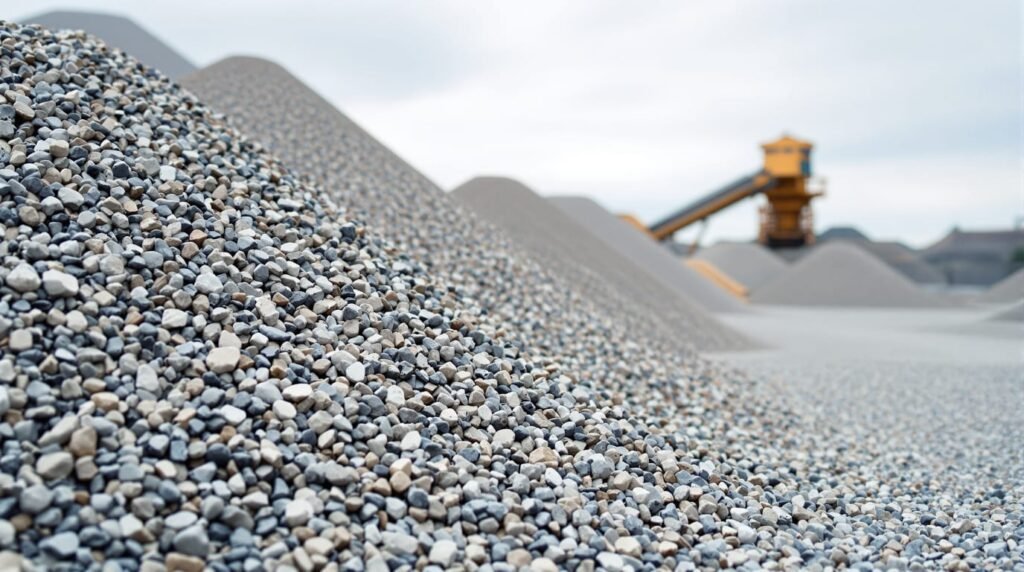

Aggregate production is the foundation of modern infrastructure. Roads, bridges, buildings, and utilities all rely on a steady supply of high-quality aggregates such as crushed stone, sand, and gravel. At the heart of this process are jaw crushers. From large quarry operations to portable setups using a mobile jaw crusher, these machines perform the critical first step in the aggregate production process by reducing raw material into manageable sizes for further processing.
This article explains why jaw crushers are considered the backbone of aggregate production and how their role in primary crushing equipment continues to shape efficiency, consistency, and profitability across the industry.
Understanding Aggregate Production
Aggregate production involves extracting raw materials, typically rock or gravel, and processing them into specific sizes and grades. These materials are then used in concrete, asphalt, road base, and other construction applications.
The aggregate production process usually includes:
- Material extraction from quarries or pits
- Primary crushing
- Secondary and tertiary crushing
- Screening and grading
Among these stages, primary crushing is the most critical. If material is not properly reduced at the start, downstream equipment efficiency and final product quality suffer. This is where jaw crushers play a central role.
The Role of Jaw Crushers in Primary Crushing
Jaw crushers are designed specifically for primary stage crushing. They use compressive force to break down large feed material into smaller, more uniform pieces. This makes them ideal for handling blasted rock directly from a quarry face.
A primary jaw crusher offers:
- The ability to accept large feed sizes
- High-capacity throughput
- Reliable performance with hard and abrasive stone
Because of these characteristics, jaw crushers are the preferred choice for aggregate producers looking for dependable and consistent material size reduction.
Why Jaw Crushers Dominate Aggregate Processing
Aggregate processing requires machines that can operate continuously under harsh conditions. Jaw crushers meet these demands better than most alternatives due to their simple yet rugged design.
Key reasons jaw crushers dominate aggregate processing include:
- Fewer moving parts compared to other crusher types
- Lower risk of clogging with oversized material
- Strong performance with granite, limestone, basalt, and recycled concrete
These advantages make jaw crushers the first choice in aggregate crushing equipment setups worldwide.
Consistent Feed for Secondary and Tertiary Crushers
One of the most important functions of jaw crushers in aggregate plants is providing a consistent feed for downstream equipment. Secondary crushers, such as cone or impact crushers, rely on uniform input material to operate efficiently.
Jaw crushers help ensure:
- Even material flow
- Reduced wear on secondary crushers
- Improved overall plant efficiency
Without a reliable primary jaw crusher, aggregate plants often face bottlenecks, excessive wear, and inconsistent final products.
Jaw Crushers in Quarry Operations
Quarries are the primary source of aggregates, and jaw crushers are essential to quarry crushing equipment systems. From small regional quarries to large-scale operations, jaw crushers handle the initial size reduction that sets the tone for the entire plant.
Jaw crushers in quarrying are used for:
- Processing blasted rock
- Producing base material for further crushing
- Maintaining high-volume production rates
Their durability and ability to operate continuously make them indispensable in quarry environments where downtime is costly.
Aggregate Production for Road Construction
Road construction depends heavily on consistent and durable aggregates. Jaw crushers for road construction aggregates ensure that raw stone is broken down efficiently before being shaped and graded.
In road projects, jaw crushers support:
- Sub-base and base layer production
- Asphalt aggregate preparation
- Long-term pavement durability
By delivering consistent feed material, jaw crushers contribute directly to the strength and longevity of road infrastructure.
Jaw Crushers for Sand and Gravel Processing
While often associated with hard rock, jaw crushers also play a key role in sand and gravel operations. They are commonly used to process oversized gravel and break down larger stones before screening.
Jaw crushers for sand and gravel help:
- Reduce oversized material
- Improve screening efficiency
- Maintain consistent aggregate gradation
This versatility allows aggregate producers to use jaw crushers across multiple material types within the same operation.
Mobile Jaw Crushers in Aggregate Production
In recent years, mobile jaw crushers have become increasingly popular among aggregate producers. A mobile jaw crusher allows operators to bring primary crushing directly to the material source, reducing hauling costs and increasing operational flexibility.
Benefits of mobile jaw crushers for aggregate production include:
- On-site material processing
- Reduced transportation expenses
- Faster setup and relocation
- Ideal solutions for temporary or remote sites
Mobile units are especially valuable for contractors and producers who work across multiple locations or need rapid deployment.
Heavy-Duty Jaw Crushers for High-Capacity Operations
Large aggregate plants often require heavy-duty jaw crushers capable of handling high throughput and continuous operation. These machines are designed to withstand extreme loads and abrasive materials.
A high-capacity jaw crusher provides:
- Reliable performance in demanding conditions
- Increased production volumes
- Long service life with proper maintenance
For large-scale aggregate production, investing in a robust aggregate jaw crusher machine is essential to maintaining output targets.
Aggregate Quality and Gradation Control
Quality control is a major concern in aggregate production. Jaw crushers contribute to consistent aggregate gradation by producing uniform material at the primary stage.
Benefits for aggregate quality include:
- Improved sizing consistency
- Better compatibility with screening equipment
- Reduced reprocessing and waste
Consistent primary crushing leads to better final products and higher customer satisfaction.
Cost Efficiency in Aggregate Plants
Jaw crushers help aggregate producers manage costs in several ways. Their efficient design reduces energy consumption compared to less suitable crushing equipment, and their durability minimizes maintenance downtime.
Cost-related advantages include:
- Lower operating costs per ton
- Reduced maintenance frequency
- Longer component life
Over time, these benefits make jaw crushers one of the most cost-effective choices in aggregate crushing equipment.
Choosing the Right Jaw Crusher for Aggregate Production
Selecting the right jaw crusher depends on material type, production volume, and site requirements. Producers must consider feed size, desired output, and whether a stationary or mobile solution is more appropriate.
When evaluating jaw crusher equipment for sale, key factors include:
- Capacity requirements
- Material hardness
- Mobility needs
- Integration with existing aggregate processing systems
The right primary jaw crusher can significantly improve productivity and operational efficiency.
Conclusion
Jaw crushers are the backbone of aggregate production because they perform the most critical task in the process: primary material reduction. From quarry crushing equipment to mobile jaw crushers used on temporary sites, these machines provide the reliability, efficiency, and consistency aggregate producers depend on every day.
By delivering uniform feed material, supporting high-capacity operations, and adapting to a wide range of aggregate applications, jaw crushers continue to play a central role in modern aggregate production. For producers seeking dependable primary crushing equipment, jaw crushers remain the industry standard that keeps the entire process moving forward.